Overview
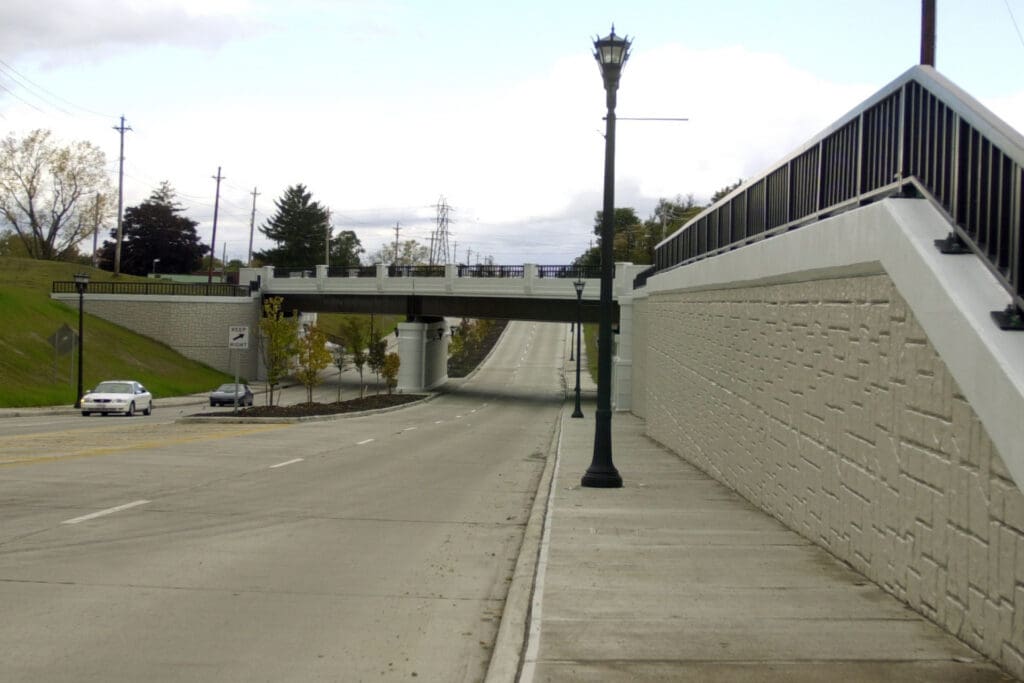
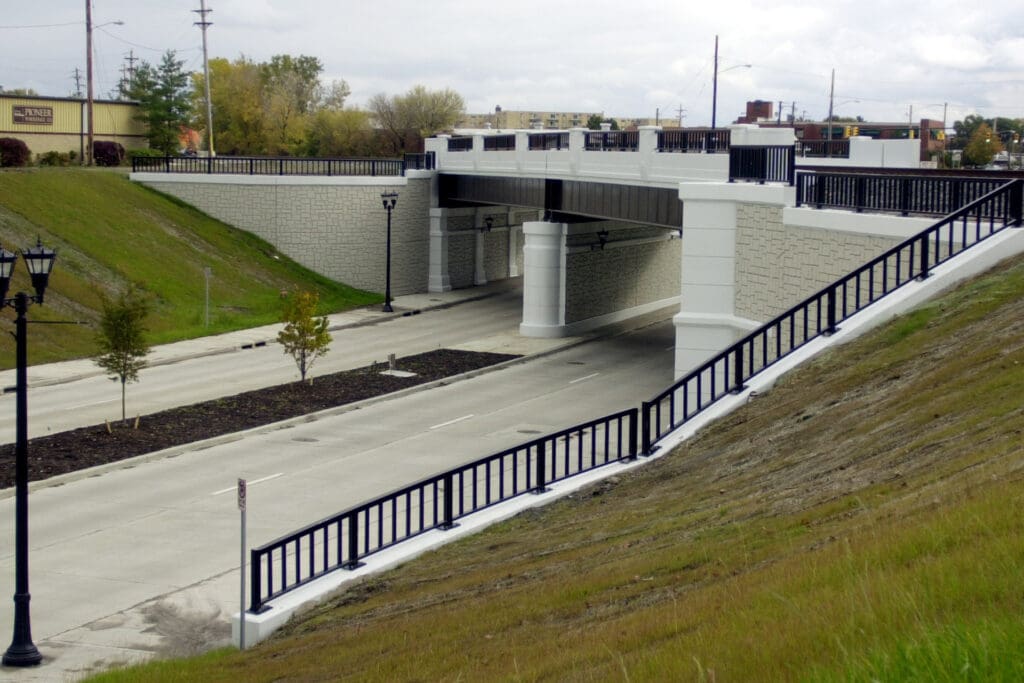
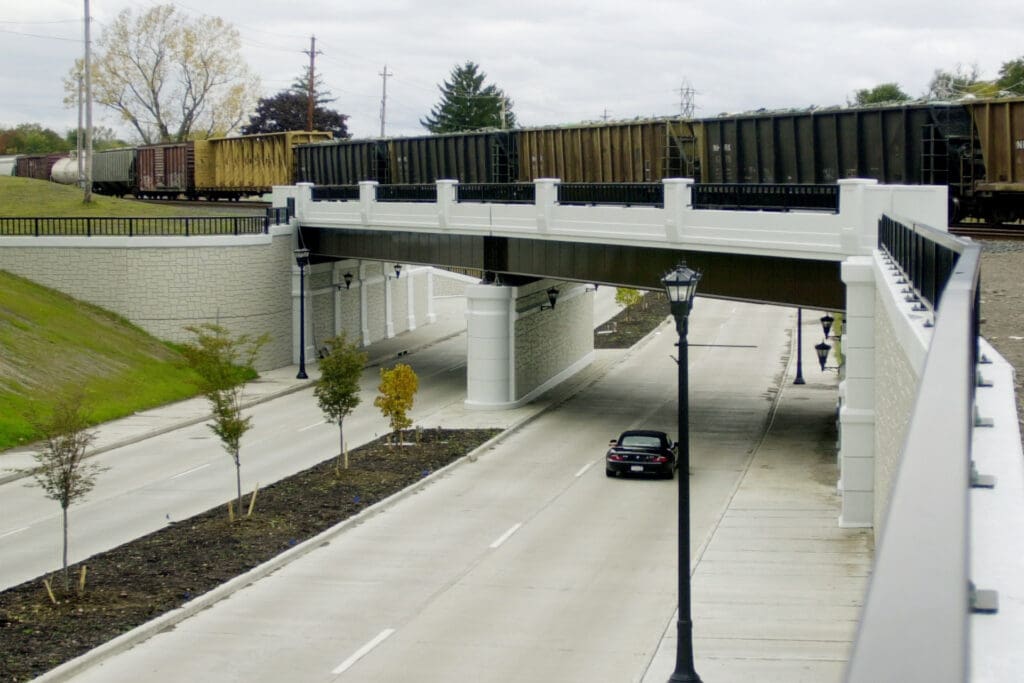
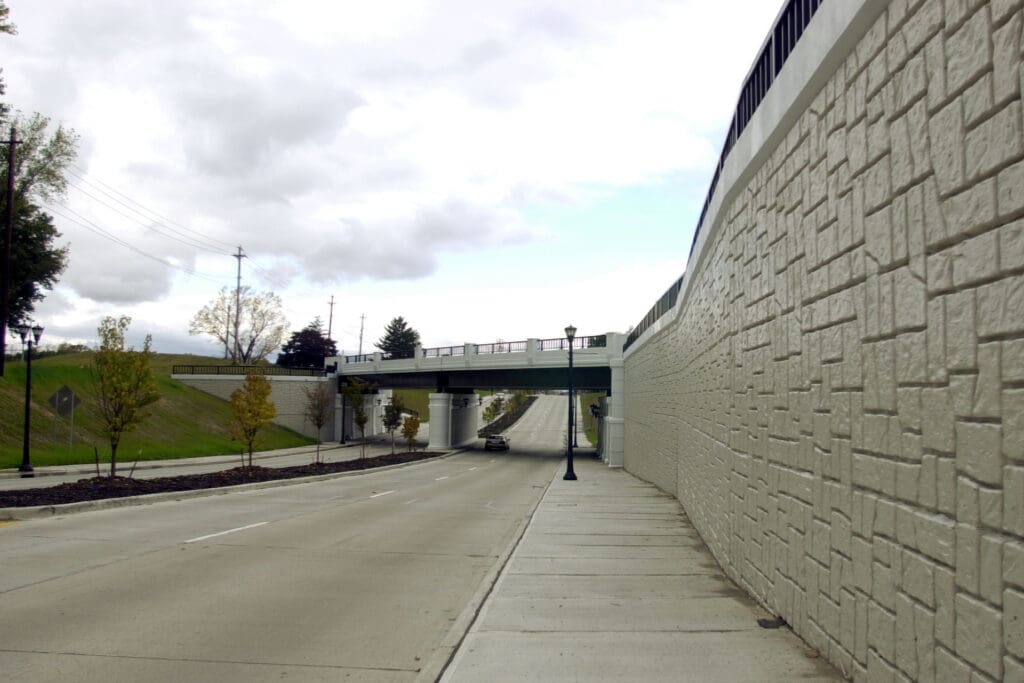
The completed Bagley Road grade separation project replaced the at-grade crossing at the CSX Railroad with an approximately 1,500-foot roadway underpass. Prompted by increased train traffic following the Conrail merger, the project lowered Bagley Road using a sag vertical curve. The roadway includes four through lanes, a center turn lane, curbs, tree lawns, and sidewalks, complemented by decorative street lighting and a landscaped median with water and electrical service connections.

Process
Maintaining rail and roadway traffic was a key consideration throughout construction. The new CSX Railroad bridge was built on a permanent rail runaround using a top-down construction method to maintain rail service. A temporary roadway runaround kept traffic moving on Bagley Road. DLZ also integrated aesthetic treatments into the design, including a Berea sandstone-pattern finish on the bridge and retaining walls and colored, stamped-concrete sidewalks.
Working within right-of-way and railroad constraints, DLZ provided design services for storm and sanitary sewers, decorative lighting, retaining walls, signing and striping, maintenance of traffic, right-of-way, and a traffic signal. The design also relocated a portion of Geiger Street and lowered Lindberg Road to connect with Bagley Road’s new grade. To drain the underpass low point, DLZ designed a deep microtunnel sewer outfall. Construction was delivered through two separate contracts to accommodate funding and scheduling needs.
DLZ’s Field Services and Geotechnical Divisions supported the design with subsurface exploration, including soil sampling and rock coring for the bridge and retaining wall foundations, along with shallow soil borings for the relocated and realigned roadways. The relatively shallow Berea sandstone formation and top-down construction approach informed the selection of drilled shaft foundations for the bridge. DLZ also performed exploratory drilling and laboratory testing along the microtunnel sewer outfall alignment.