Overview
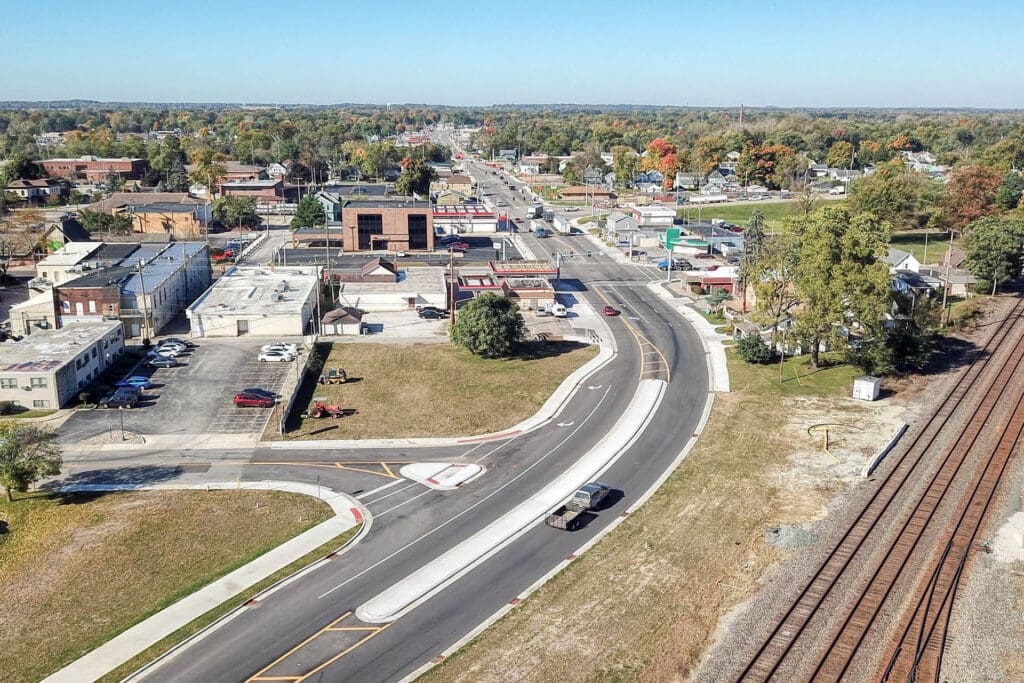
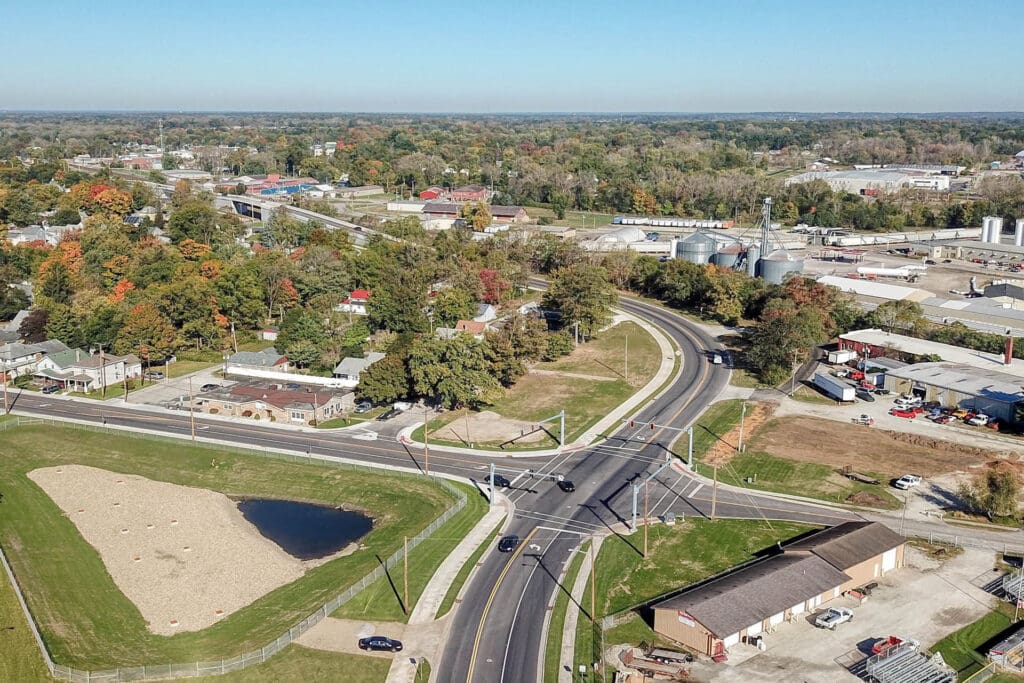
From the beginning, the City asked that their “Maple City” image not be divided by five lanes of concrete down the heart of their downtown. Concerns about congestion, safety, and delays caused by the 9th Street rail tracks, spurned the consideration of investigating grade separations on Madison Street (US 33), which passed through the historic district, businesses and close to two schools. The State listened, and many alternatives were explored in a Community Advisory Committee (CAC) forum, along with the mayor and future mayor. One-way pairs, 2-lane, 4-lane options, rail underpasses, overpasses, and others were all considered, and the “North Connector” was ultimately chosen.
Process
The North Connector was not a new concept, but it had perceived issues, including environmental justice (EJ) impacts, more rail crossing concerns, significantly more relocations, and takings of 32 homes. The team worked through these issues, showing EJ was not an issue and held meetings with IDNR/SHPO to walk the two alignments. DNR concurred that building an elevated North Connector at the fringe of the historic district made sense over constructing five lanes of concrete through the heart of it. We now had an alternate everyone could live with – for now.
As coordination with utilities and the railroad progressed, more amenities were requested by outside stakeholders. We worked through a water main relocation/betterment plan with the City. The railroad wanted improved geometry and a future 2nd track and resulted in increased bridge lengths and costs. Five rail crossing options were presented, but the State could not increase the budget to accommodate everything the railroad desired. Cost-sharing was brought up, but an agreement was not reached, and the State was nearly ready to walk away from the table.
DLZ brought forth one more option with a reasonable bridge length, while also providing a geometry the railroad could accept. DLZ arranged conference calls with all parties presenting our case, the option was agreed to by all, and the plans moved forward. At their cost, the railroad constructed the single-track spur the summer before the US 33 North Connector letting. The City also participated in the plan, adjusting 9th Street to accommodate the rail changes.
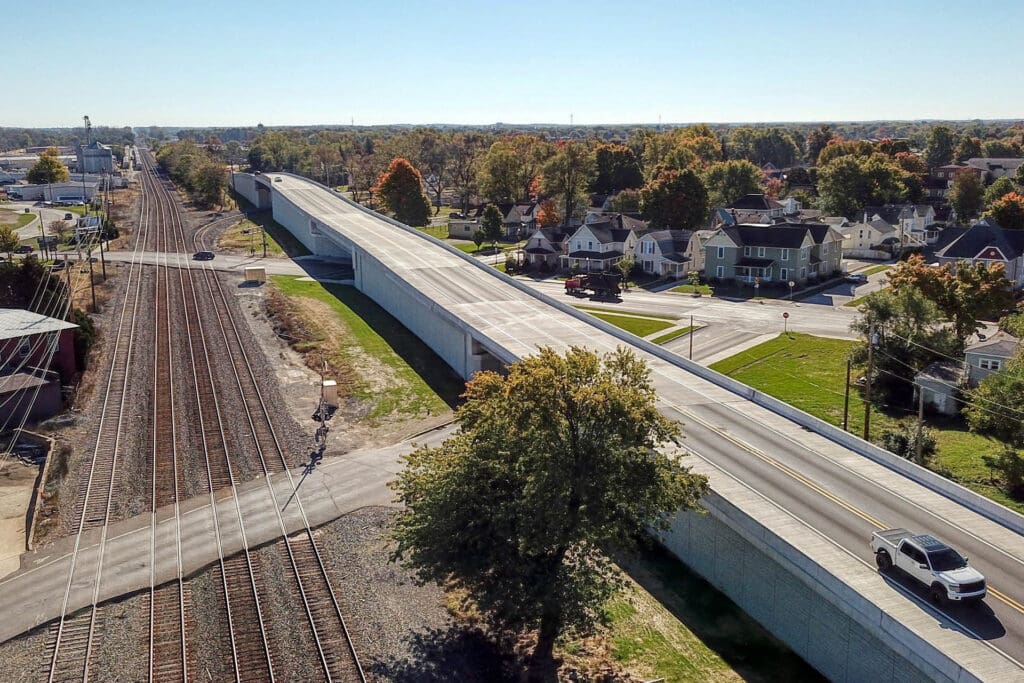
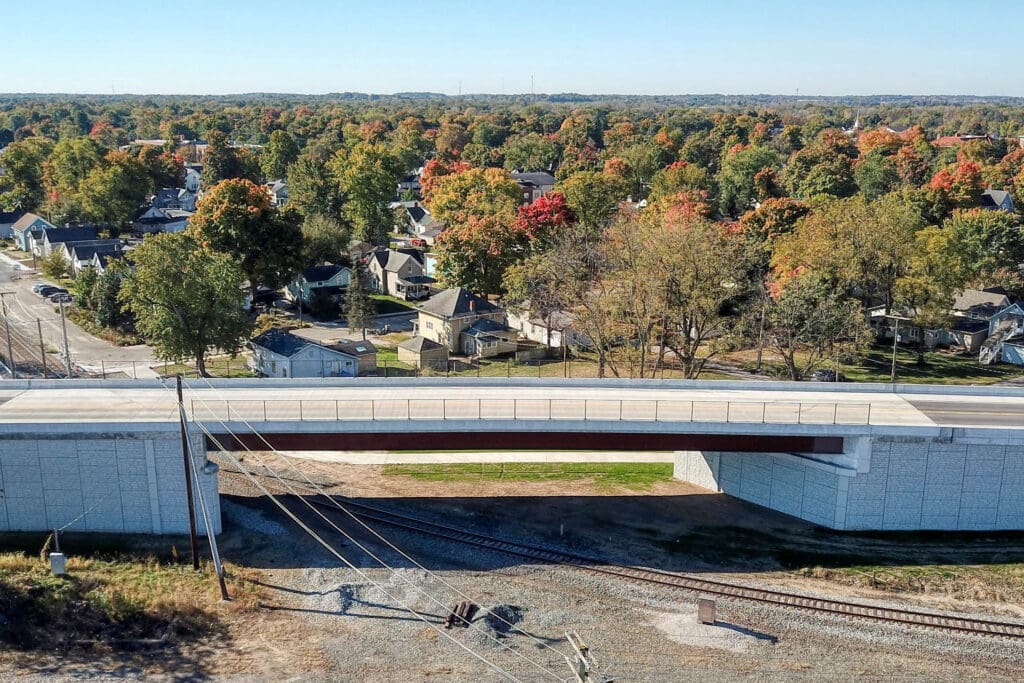
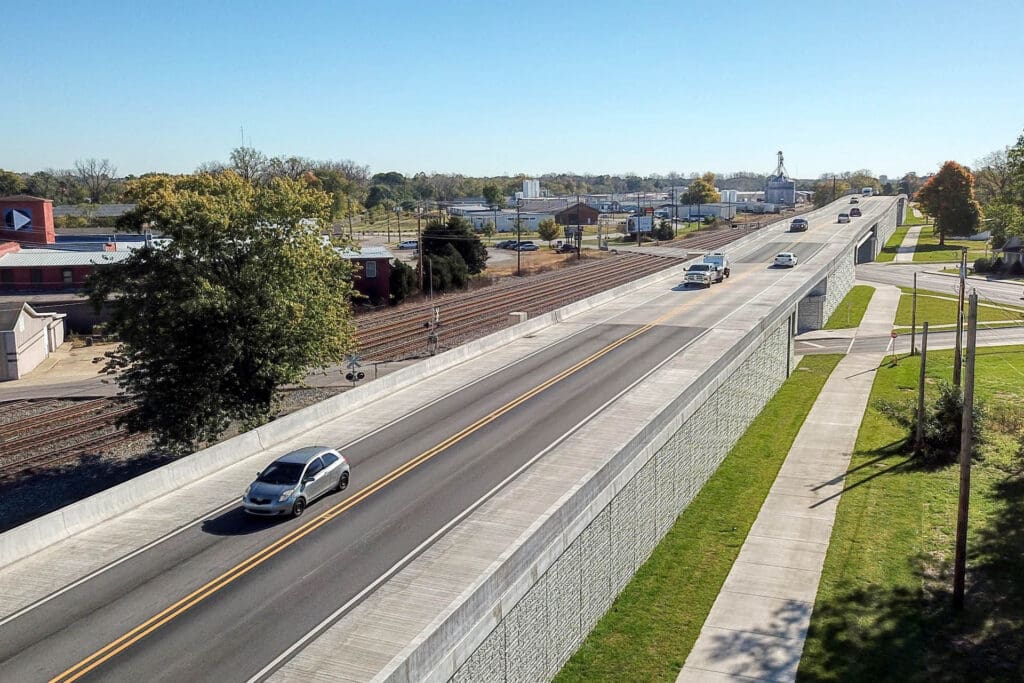
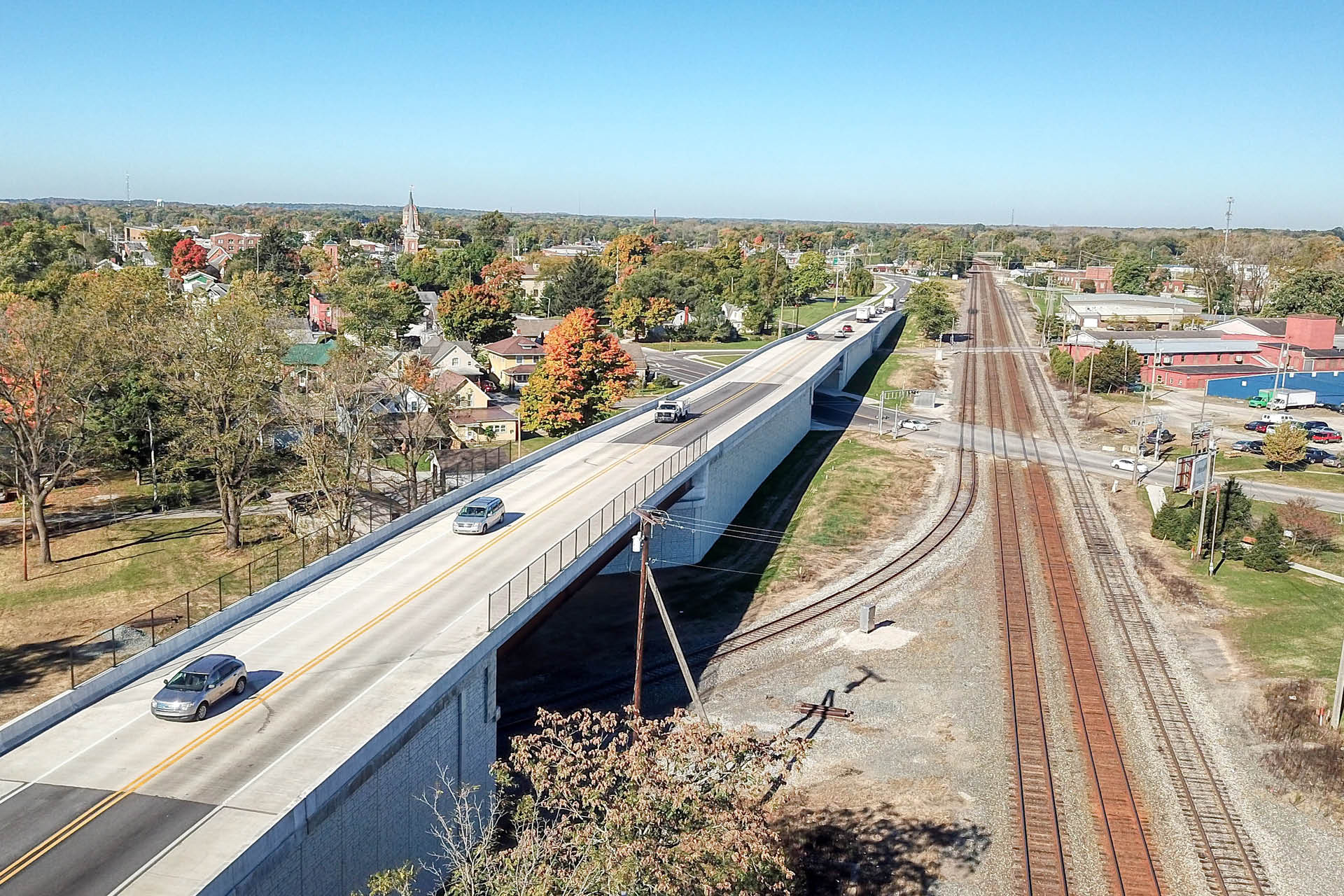
This project included the construction of three new bridges on the new US 33 alignment as well as MSE retaining walls along the elevated portion of the project. The first bridge, US 33 over Norfolk Southern Marion Line Spur, is a single span (169’-0”) bridge with a clear roadway width of 40’-0”. The superstructure consists of composite welded steel plate girders with 76” deep girder webs. There are five lines of girders spaced at 9’-0”, supporting an 8” minimum reinforced concrete deck. Integral end bents support the girders.
The second bridge, US 33 over SR 4 (Lincoln Avenue), is a single span (164’-0”) bridge with a clear roadway width of 40’-0”. The superstructure consists of 78” deep composite prestressed wide flange (61”) bulb tee beams. There are five lines of beams spaced at 9’-0”, supporting an 8” minimum reinforced concrete deck. Integral end bents support the beams.
Results
MSE walls elevated US 33 to reduce further right-of-way impact. Construction included approximately 3,795 total linear feet of wall length along the entire elevated section. The average height of these walls is over 23 feet tall.
The project includes new signage and a storm sewerage system along the realigned US 33 corridor, as well as signalized intersections at Monroe, Madison, Third, and Main Streets along with intersection improvements at these intersections and the Pike Street crossings. Extensive coordination with 12 utility providers, including municipal water and sewer utilities, was undertaken from design through construction to identify conflicts, develop avoidance or relocation strategies, and support reimbursement agreements and utility relocations.