
Overview
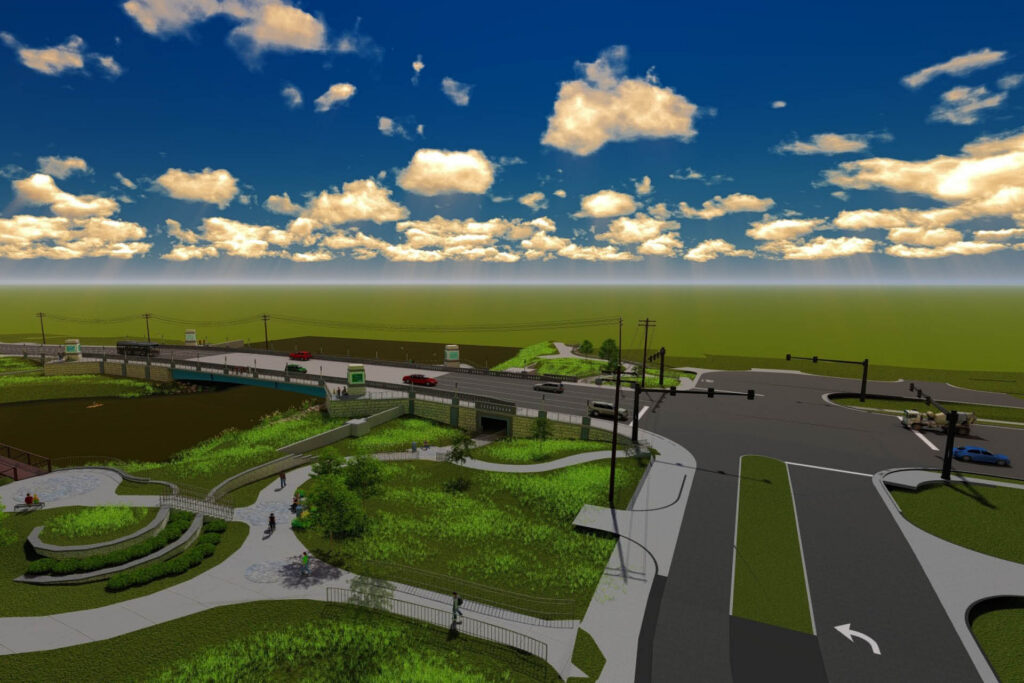
The purpose of this project was to raise the roadway and bridge above the levee to alleviate roadway flooding. The other goal was to create a gateway between Hammond and Highland. The last objective was to provide access for pedestrians to cross Kennedy Avenue without walking across five lanes of traffic.
Process
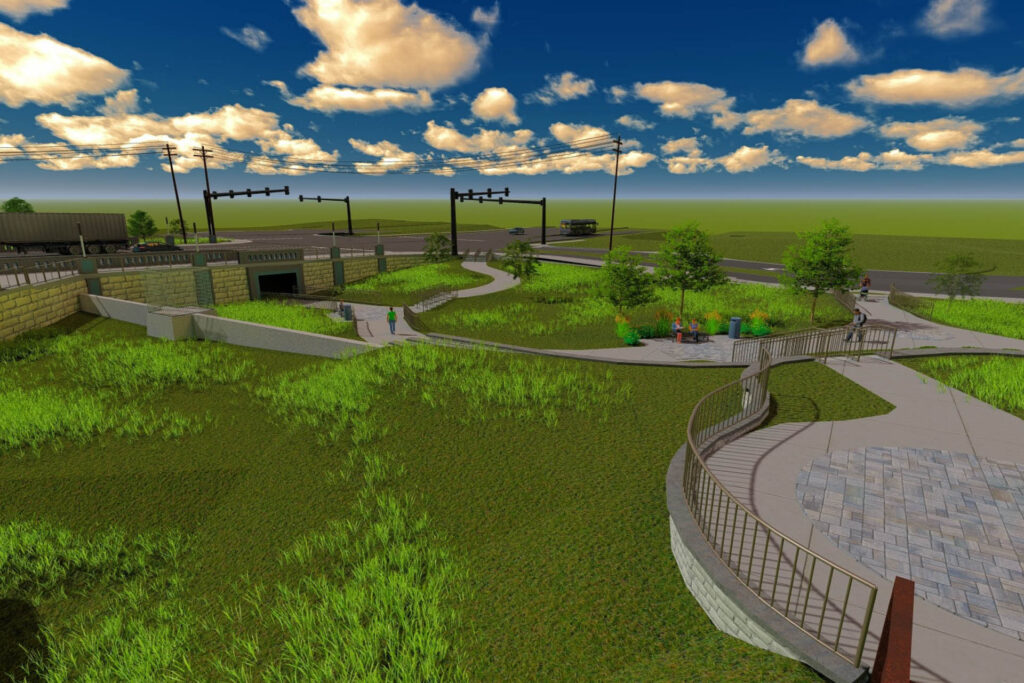
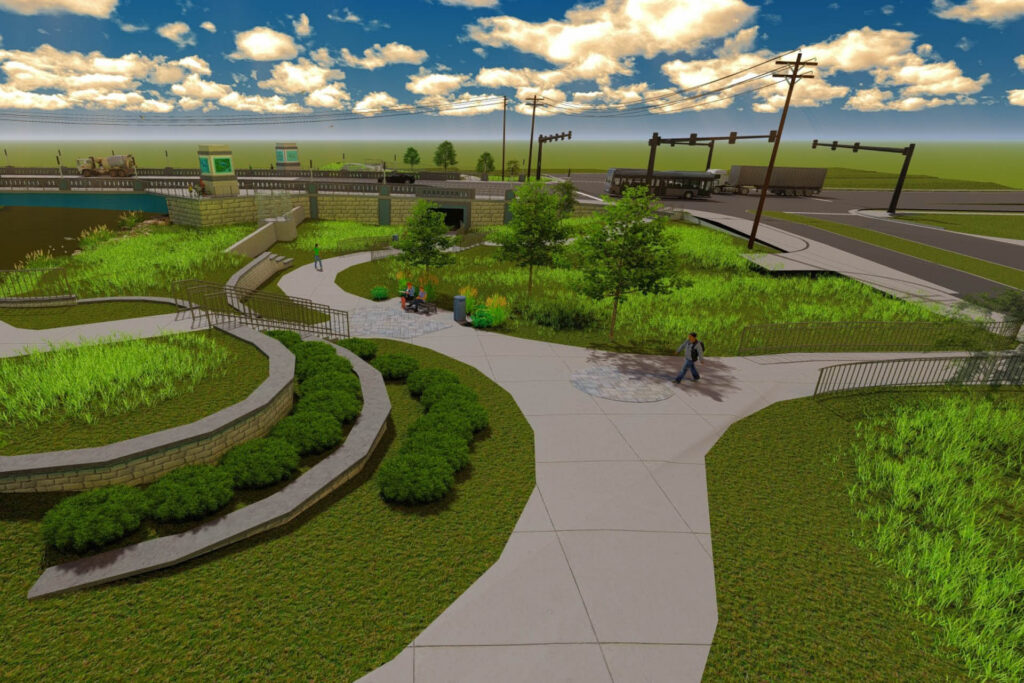
The original six-span bridge, constructed in 1955, was replaced with a single-span, composite steel beam bridge. The bottom of the fascia beams was arched for aesthetics. The roadway was raised nine feet to raise the bridge and roadway section above the levee. MSE walls support the roadway and sidewalk. Due to the clay and poor soils at the site, wick drains were used along the roadway to reduce the time it takes for the settlement to accrue. The project also included gateway monuments with artwork panels and overlook at the four corners of the bridge, sidewalk lighting, 12-foot by 10-foot box structure for a pedestrian tunnel under Kennedy Avenue, lift station for the storm drainage from the path, and site furnishings to supplement the bridge and roadway infrastructure.
The utilities influenced the construction sequence and maintenance of traffic. As part of the maintenance of traffic, we had to keep the intersection just north of the intersection open due to the Corinne Drive dead-end roadway, Carlson Drive business traffic, and open traffic on Kennedy Avenue across the bridge. The other impact was an AT&T trunk line under Kennedy Avenue and through the existing bridge deck. Splitting the construction into two seasons allowed AT&T to place new conduit on the new bridge and under the proposed roadway during Phase 1 construction, and then over the winter placed cables over to the new conduit for the rest of the construction to take place the following year.
DLZ professional services included landscape architecture, geotechnical, civil, bridge, public works, and electrical engineering, and IDNR/Army Corps of Engineers permitting. During the design of the trails, we worked with the various utilities to avoid their facilities.
Geotechnical services included a subsurface investigation and provided recommendations for the proposed structure foundations and the associated pavement (subgrade) improvements. Preparation of the analyses and recommendations followed the current INDOT and AASHTO LRFD Bridge Design Standards.