Process
Rather than treating the center island as a conventional planting bed, the landscape architecture establishes a bold, three-dimensional composition that reveals itself differently from every approach.
Results
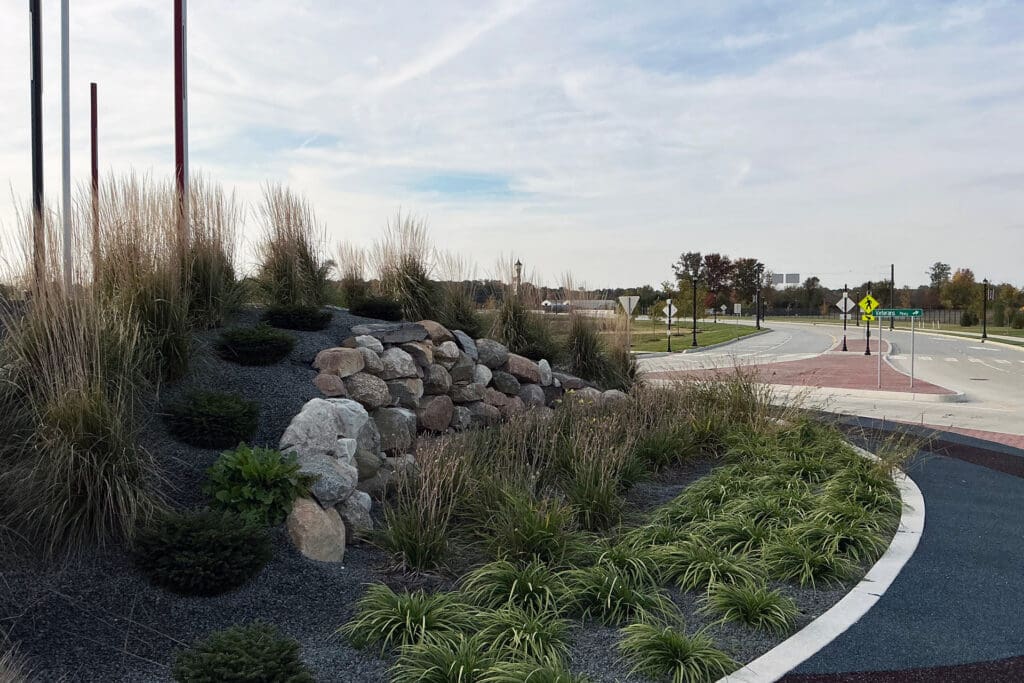
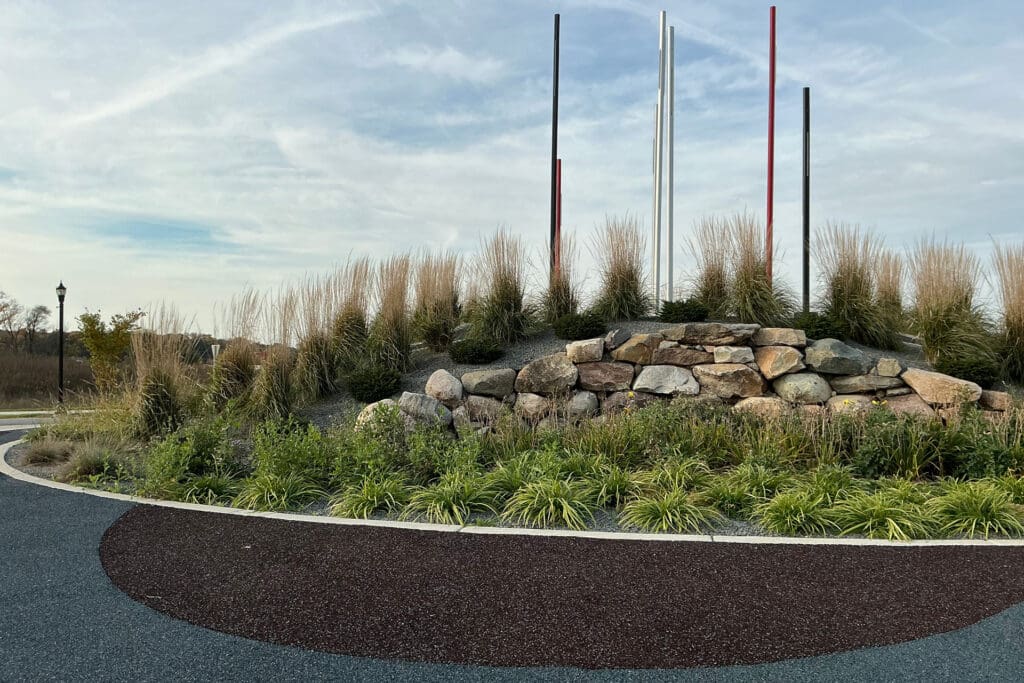
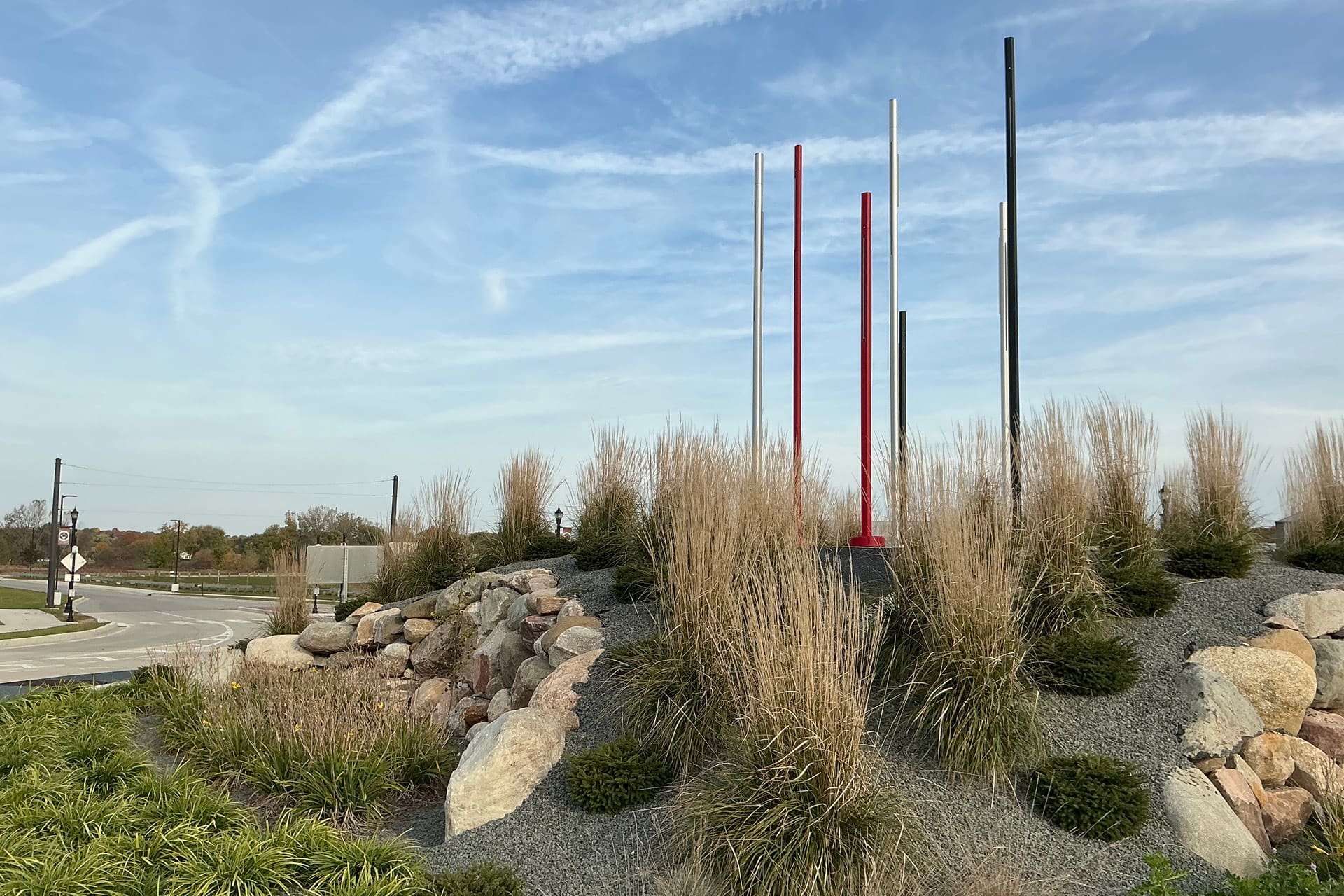
The design is organized around a sculpted central landform, where natural stone, layered vegetation, and strong vertical accents create a distinctive focal point within the roadway. Boulder-retaining walls emerge from the planted slopes, giving the composition a grounded, natural character while creating changes in elevation that allow the landscape to remain visually prominent from surrounding travel lanes. Sweeps of ornamental grasses reinforce the sense of movement, their upright forms and seasonal texture providing a softer counterpoint to the weight and permanence of the stone.
Plant material is arranged in repeating bands and masses that respond to the circular geometry of the roundabout. Feather reed grass, blue fescue, daylilies, white lilyturf, and low-growing bird's nest spruce create contrasting layers of height, color, texture, and form. The composition becomes less about viewing a single façade and more about experiencing a continuously changing landscape as motorists circulate around the island.
Rising above the planting, slender vertical lighting elements create a contemporary sculptural centerpiece. Their red, black, and light-colored finishes provide a strong visual identity against the grasses, stone, and sky, extending the composition vertically while remaining open enough to preserve views through the landscape. At ground level, stone aggregate and curving areas of colored porous paving extend the design beyond the planted center and reinforce the circular movement of the roadway.